

What is it, and how does the initiative operate today?
Stories for Life is an initiative that uses storytelling, a form of communication with deep roots in the local culture—to convey knowledge, spark conversation, and encourage people to bring about change in their own daily lives.
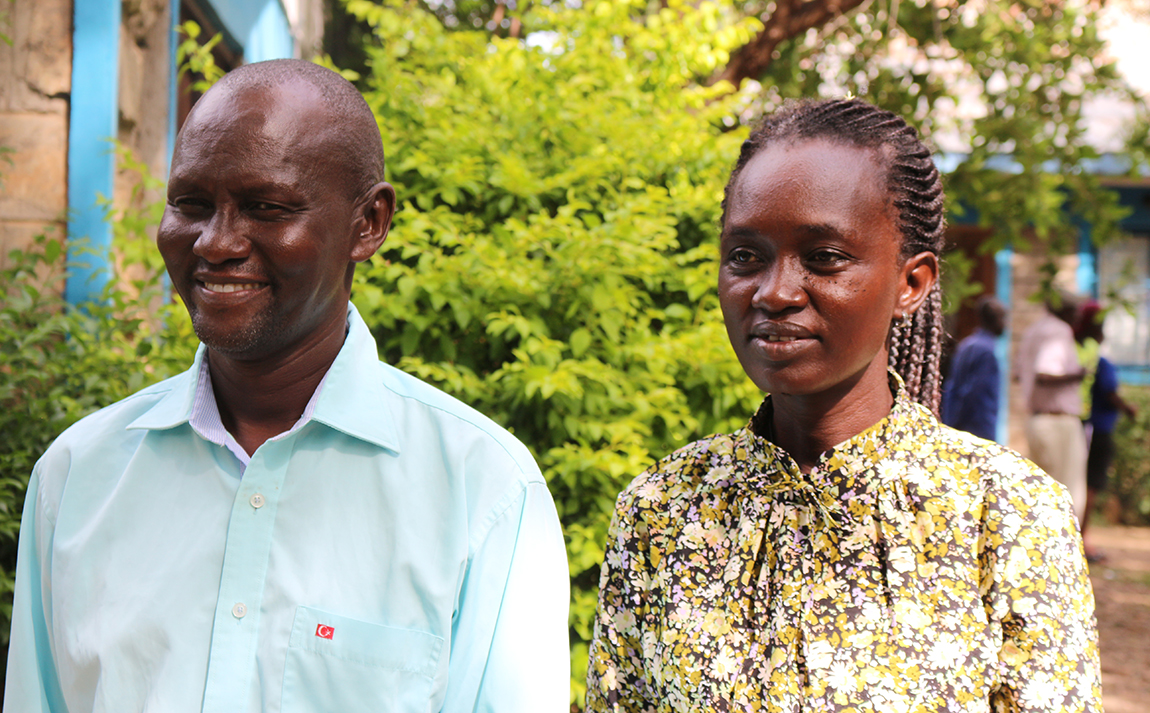 The work is carried out by the local church, part of the Free Pentecostal Fellowship in Kenya (FPFK), in Lokichoggio, northern Kenya, in collaboration with Lorensbergskyrkan (Lorensberg Church) in Kalmar, Sweden. Michael and Sarah Edapal lead the work in Kenya.
Who does Stories for Life reach?
Stories for Life was developed specifically for the closely related pastoralist (herding) peoples: the Turkana in Kenya, and the Toposa and Nyangatom in South Sudan and Ethiopia. Together, they belong to a group known as the Ateker. Many live in highly vulnerable conditions, facing poverty, drought, conflict, and limited access to clean water, healthcare, and education. SFL addresses issues that people encounter in their everyday lives, doing so in a way that aligns with their culture and preferred methods of communication.
Why stories?
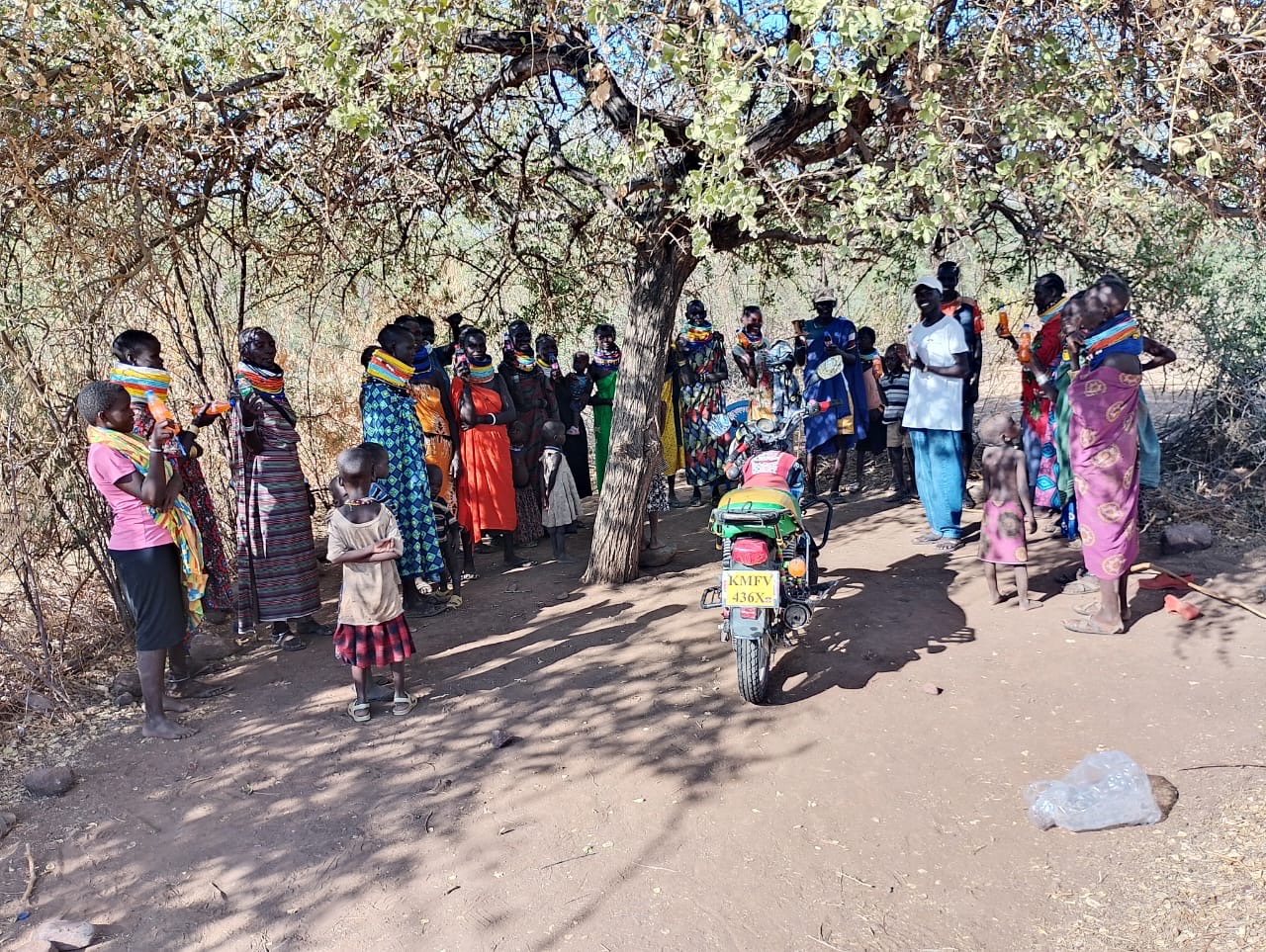 The initiative began with a preliminary study in 2018/2019, which included interviews and anthropological research among the Turkana, Toposa, and Nyangatom peoples. The SFL stories were subsequently developed in collaboration with local residents and tested through various workshops and practical application. In these cultures, the tradition of storytelling is both strong and deeply ingrained.
The result is a book containing 29 stories, accompanied by a section providing factual information. The stories cover topics such as children’s health, farming, clean water, diarrhea, malaria, malnutrition, HIV/AIDS, drugs, the "evil eye," every child’s right to schooling, disability, family life, peace, and livelihoods. There are also stories that introduce Jesus..
The stories are based on situations that the participants themselves recognize. During evaluation visits in 2025, participants remarked that the material described their own reality so accurately that it must have been written specifically about their village.
How a Stories for Life lesson works
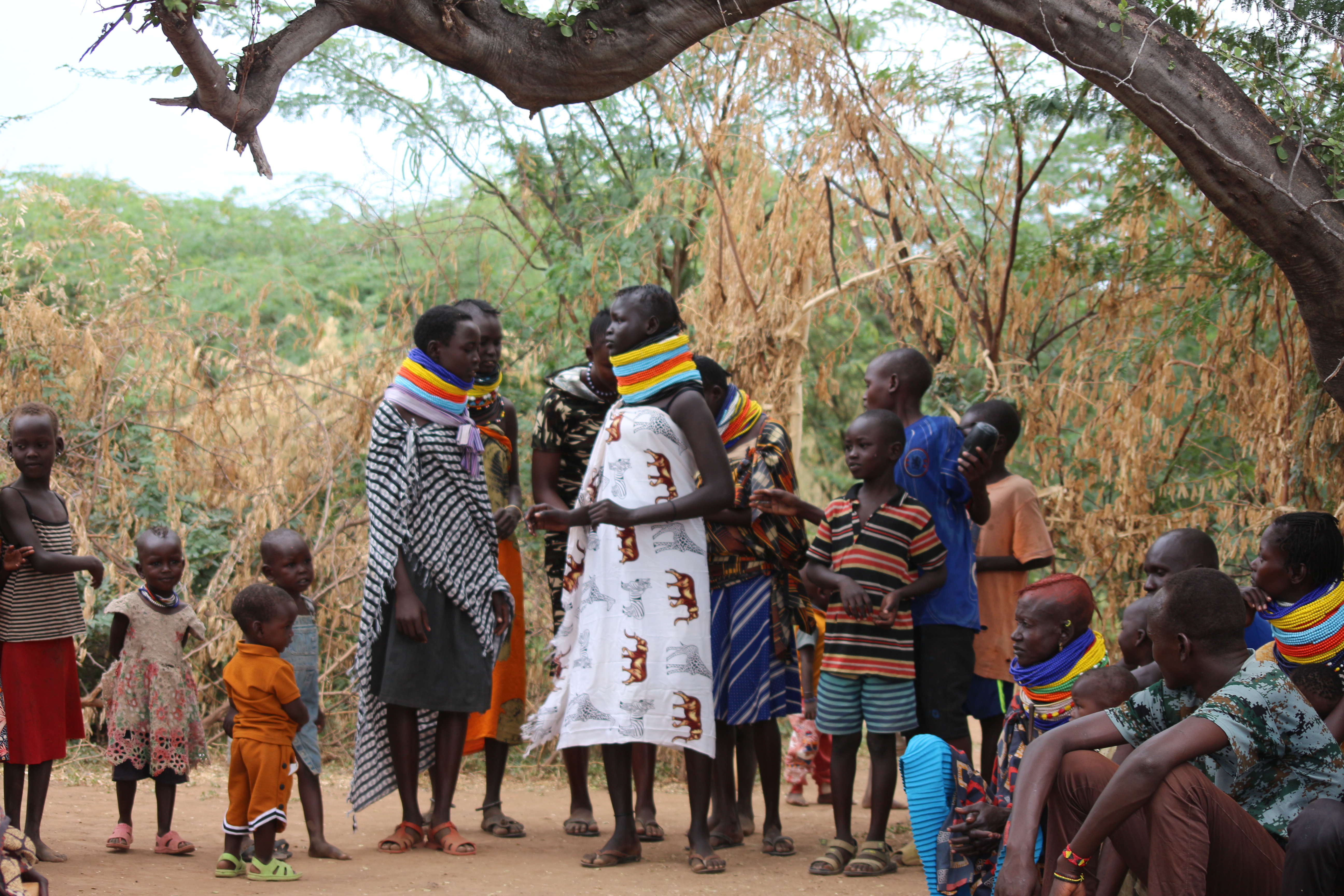 A Stories for Life (SFL) lesson is not a lecture, but rather a combination of storytelling, discussion, factual information, and practical action. A group typically gathers under a tree or in another simple setting within the village, led by two trained facilitators. A story is played in the local language via a small speaker. It might, for instance, be about a child falling ill with diarrhea and dehydration, or it could address topics such as malaria, clean water, malnutrition, family life, drugs, children’s education, or farming. For pastoralist (herding) communities, farming is not part of their traditional way of life.
The story is usually divided into two parts. After the first part, the group engages in discussion; the facilitator asks questions, and participants share what they recognize from their own lives and describe the situation in their own village. The second part of the story is then played. Using the factual section provided in the book, the facilitator then explores the topic in greater depth. For example, if the story concerns diarrhea, the discussion might cover dehydration, contaminated water, and how to care for a sick child. Where relevant, the program also includes a practical component—for instance, demonstrating how to prepare oral rehydration solution (ORS) or purify water. Finally, participants are encouraged to relate this knowledge to their own daily lives: What can we do differently? What can we teach our children?
At the same time, SFL is a Christian initiative. Consequently, the discussions may also open the door to conversations about faith, human dignity, hope, reconciliation, and the story of Jesus. The church’s mission is to address the whole person—encompassing both their faith and the practical realities of their everyday life. Through this work, small congregational groups have begun to emerge and grow.
From training courses to village-based work
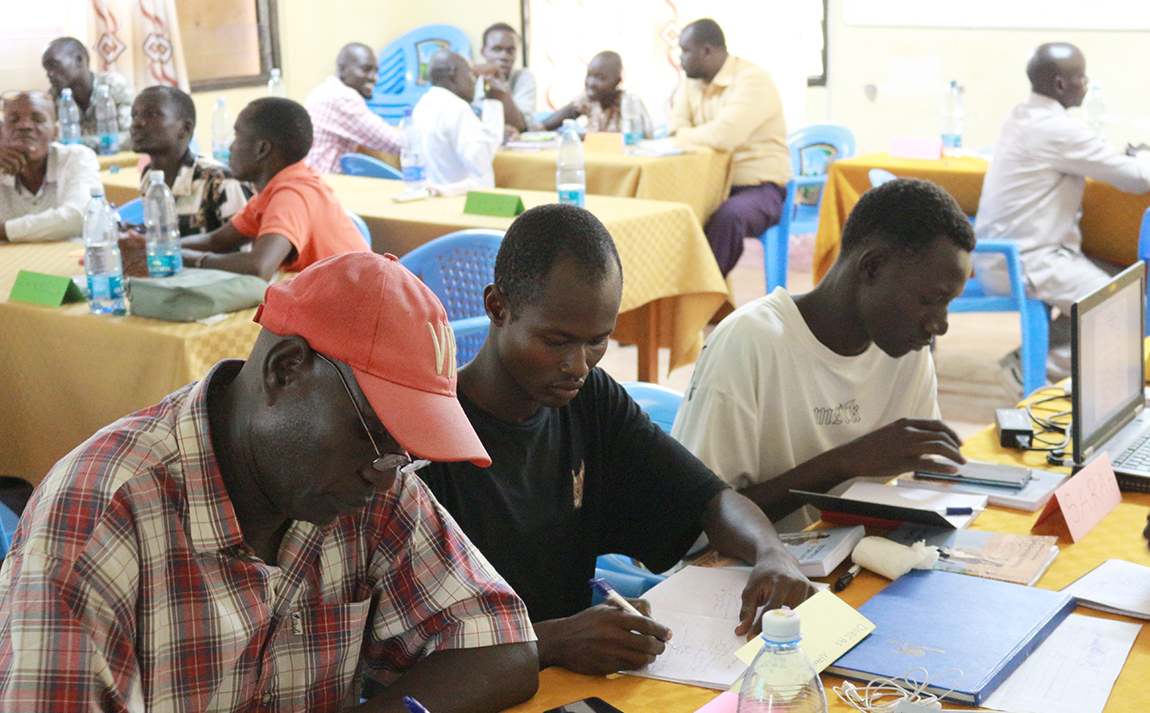 Up until the end of 2024, much of the effort was centered on week-long training courses. Over the years, more than 60 individuals have been trained as facilitators.
As of 2025, the approach shifted. The focus moved from primarily training new people to enabling previously trained facilitators to apply their skills within the villages. The longer courses were replaced by shorter follow-up sessions and recurring facilitator training, led by Sarah and Michael.
In 2026, the program expanded from 5 to 10 villages, with two groups in each village. In total, 20 facilitators are involved—typically two per group. Each group has approximately 24 registered participants, amounting to about 480 participant spots in total. Meetings are held on a weekly basis. By August 20, 2026, at least 650 lessons had been conducted. The villages—all located between the towns of Lodwar and Lokichoggio in the Turkana region—are Ngigolokii, Lotorob, Nabuin, Nadwat, Kalongolomoe, Lodwar, Kakuma, Teremukus, Nadome, and Nakwamor.
Facilitators: More than just a role within the project
The lesson facilitators are a central component of the current model. Many are young, and several are women. They receive a small stipend for the sessions they conduct, which provides them with an income; indeed, many of them would otherwise be unemployed. However, the role offers value beyond mere financial compensation. By teaching in their own villages, they gain experience in public speaking, leading discussions, imparting knowledge, taking responsibility, and submitting reports. Ongoing training further strengthens their skills and self-confidence. The facilitators themselves have described the satisfaction and pride of having something important to contribute to the people in one’s own village.
This is a key component of SFL’s long-term development: the project builds not only knowledge among the participants but also capacity in individuals who can carry the work forward themselves.
Follow-up and local integration
SFL is implemented locally, yet it is closely monitored by both the Kenyan and Swedish project management teams. Lorensberg Church in Kalmar conducted follow-up and evaluation visits to Kenya in 2025 and 2026. Michael and Sarah hold ongoing responsibility for follow-up and the training of facilitators. Furthermore, Lorensberg Church maintains weekly contact with the leadership team in Kenya via WhatsApp. Photos and reports from village gatherings arrive almost daily through a dedicated WhatsApp group. This provides an ongoing view of the activities between in-person visits, allowing for prompt follow-up on issues and the provision of support.
From knowledge to practical action
WATER is a source of life. Yet, if it is unclean, water can also bring disease and death. People collect their drinking water from rivers or water holes. Countless children die as a result of diarrhea and malnutrition. So, how does SFL address the issue of water? Primarily through the TEACHING provided within the SFL groups. Several stories and lessons focus on how to prepare and distribute an oral rehydration solution (ORS)—a mixture of sugar and salt. There have been encouraging reports regarding the use of ORS. Women have told Sarah Edapal that they now use ORS (oral rehydration solution) for their children when needed, and some have reported fewer child deaths within their families.
The program has also identified families severely affected by the drought, and some malnourished children have received food assistance. Sarah and Michael have provided nutritional advice as part of these various initiatives.
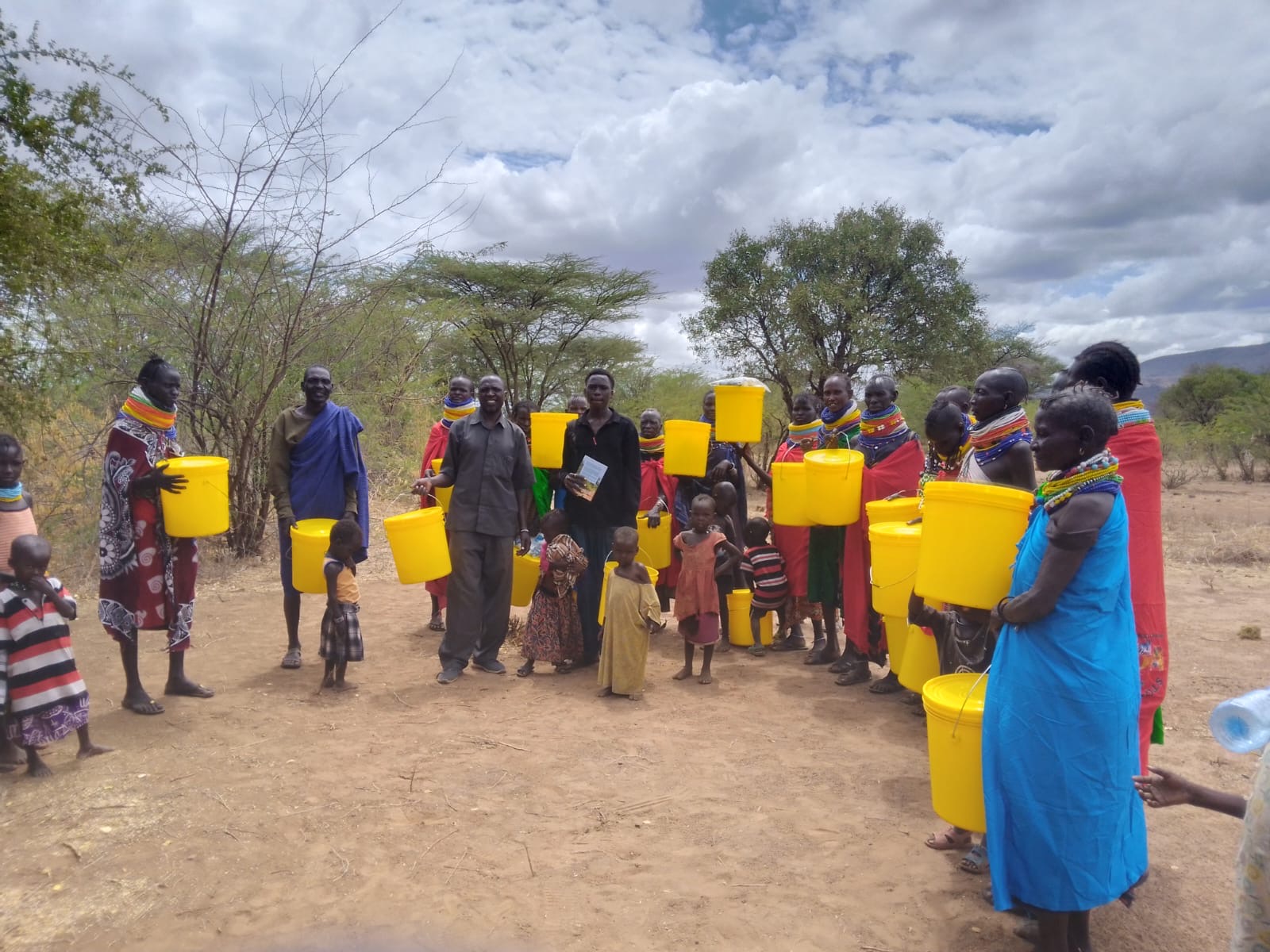 The issue of water has been a component of Stories for Lif* (SFL) from the very beginning. Through a partnership with Water Matters hundreds of water filters have been distributed. Every participant in the SFL groups receives a filter kit for their family. Distribution takes place only after thorough, relevant instruction on the importance of clean water and how to maintain the filter. Facilitators are responsible for follow-up and guidance. The filters have brought great joy to the groups! They can now take water from a pit or a stream and still obtain clear, drinkable water. The filters remove 99% of all bacteria. By September 2026, hundreds of filter kits had been distributed.
Water is also used for cultivation. One example can be found in Nadome, on the outskirts of Lokichoggio, where a well has created new opportunities for a group of women. They have begun growing vegetables, cowpeas, and other crops. Each week, they sell bundles of vegetables for approximately 50 KES each. There is great enthusiasm; the women see that, through their own efforts, they can generate both food and income for their families. This has come about through the instruction, inspiration, and support provided by *Stories for Life*. This is precisely the type of development we hope this work will foster: empowering individuals with the knowledge, inspiration, and opportunity to transform their daily lives. Sarah Edapal leads this initiative.
The malaria-carrying mosquito requires water to survive. During the rainy season, malaria claims many lives. The distribution of mosquito nets is also a key component of the program.
The village of Naduat West is a particularly vulnerable community, marked by poverty, a lack of clean water, and limited access to schooling. People search for gold in the ground, land that has been dug up everywhere. Crime, social issues, and low adult literacy rates are prevalent. Here, a few congregation members have stepped up as "Stories for Life" (SFL) leaders, regularly bringing villagers together. Plans are now underway for dedicated SFL gatherings for children , as well as preschool activities , to be held twice a week throughout 2027. A local couple has donated land to the church for these activities. The hope is to help establish a preschool in Naduat! Already, a woman from the area has begun teaching the children how to read.
PMU’s Role and the Congregation’s Responsibility
In 2026, PMU (Pentecostal Mission Development Cooperation) provided temporary yet vital support to "Stories for Life." PMU’s positive stance and backing serve as a strong seal of quality! This support has enabled a significant expansion of the initiative and helped develop the current structure, which includes village groups, ongoing training, and practical interventions. At the same time, the support from PMU does not cover the entirety of the operations. On the contrary, it is precisely this congregational involvement—both financial and otherwise—that motivates PMU to support the work.
Lorensberg Church in Kalmar has gladly taken primary responsibility for the initiative, contributing to its funding and leadership, with additional support from other congregations. This congregational backing is crucial for ensuring the continuity of Stories for Life (SFL)—both during the period of PMU’s involvement and beyond. Furthermore, as project-based funding does not cover all costs and requirements, more congregations are needed to help sustain the work in the long term.
More than just a project
Stories for Life is more than just a project. It is an exciting, long-term commitment an approach built on close personal contact, with opportunities for visits and for following and supporting the work on the ground. Stories for Life focuses specifically on the most vulnerable, especially children and their future. This has enabled the congregation in Lokichoggio to share the message of Jesus in 10 villages, so far. From this commitment, a sub-project called Loki Street Kids has also emerged, with the goal of offering vulnerable street children in Lokichoggio a new chance at a secure life, one filled with care, education, and hope for the future.
We welcome other congregations to join us in this mission and help the work continue to grow and reach even more people.
Would you or your congregation like to support this work? Please get in touch with us at: